Small Steps, Big Impact: Waste Management Initiatives through KKN UII
Waste Management Based on Kuliah Kerja Nyata (KKN) Universitas Islam Indonesia is a community service approach developed from the practical implementation of KKN programs, with a focus on waste management at the village level. This model is grounded in real field conditions, where some communities still manage waste by burning or disposing of it without proper treatment, and where a sustainable waste management system has not yet been fully established.
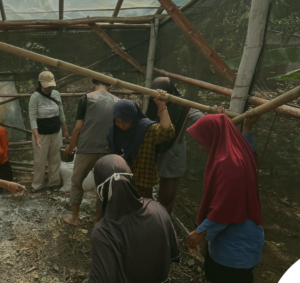
Through KKN activities, problem identification is conducted directly in collaboration with village officials and local communities. The observations indicate that effective waste management requires not only awareness campaigns but also the provision of simple and applicable facilities that can be directly utilized by the community.
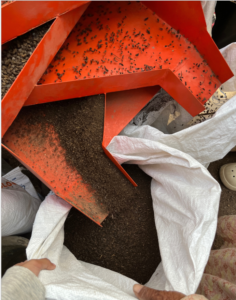
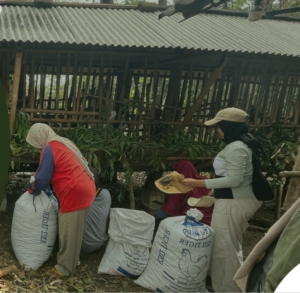
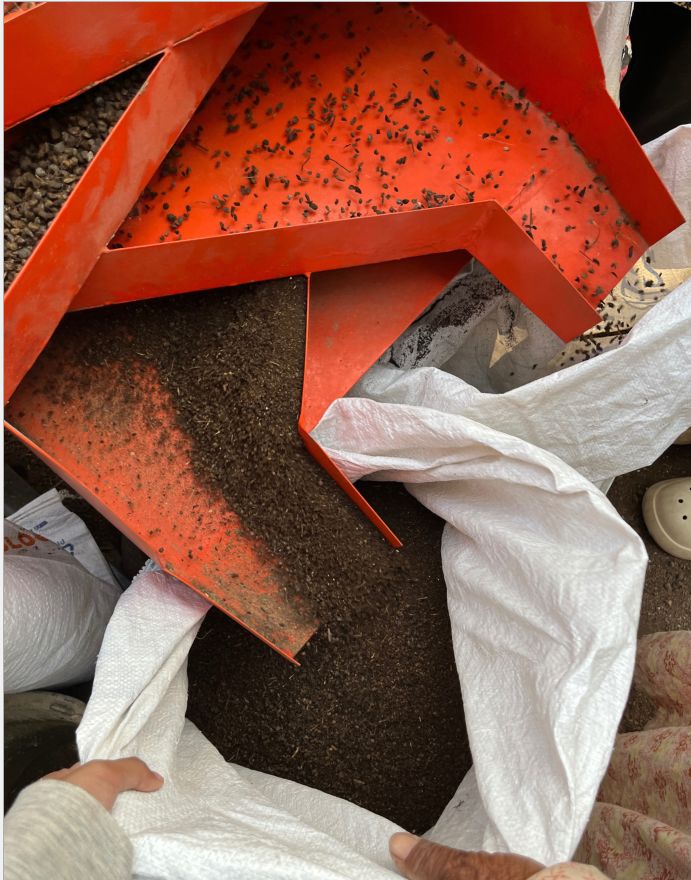
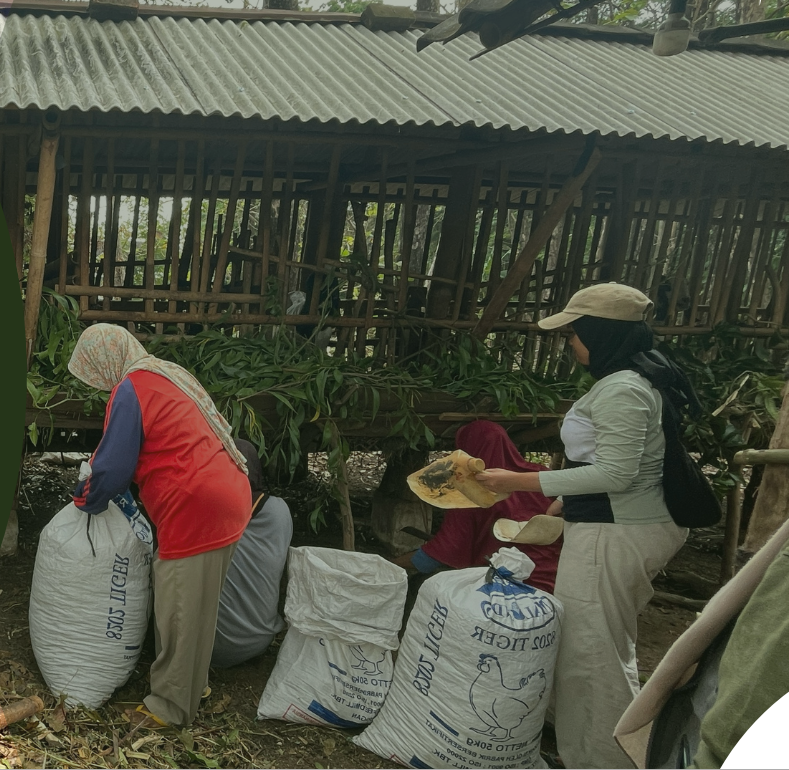
The approach implemented in this model consists of several complementary activities. One of the key components is the processing of organic waste into compost, including the utilization of livestock manure as the main material. The manure is mixed with additional materials such as rice bran, dolomite, and liquid activators, and then fermented for approximately 10–15 days to produce compost ready for use. The resulting compost is characterized by a dark brown color, an absence of strong odor, and a crumbly texture similar to soil.
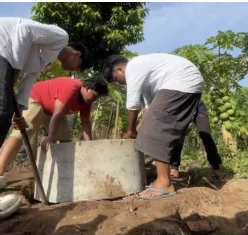
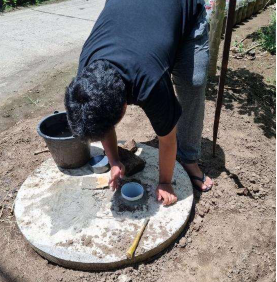
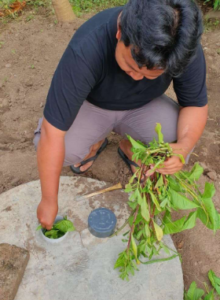
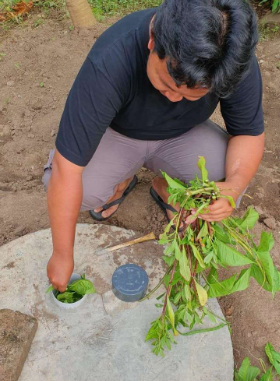
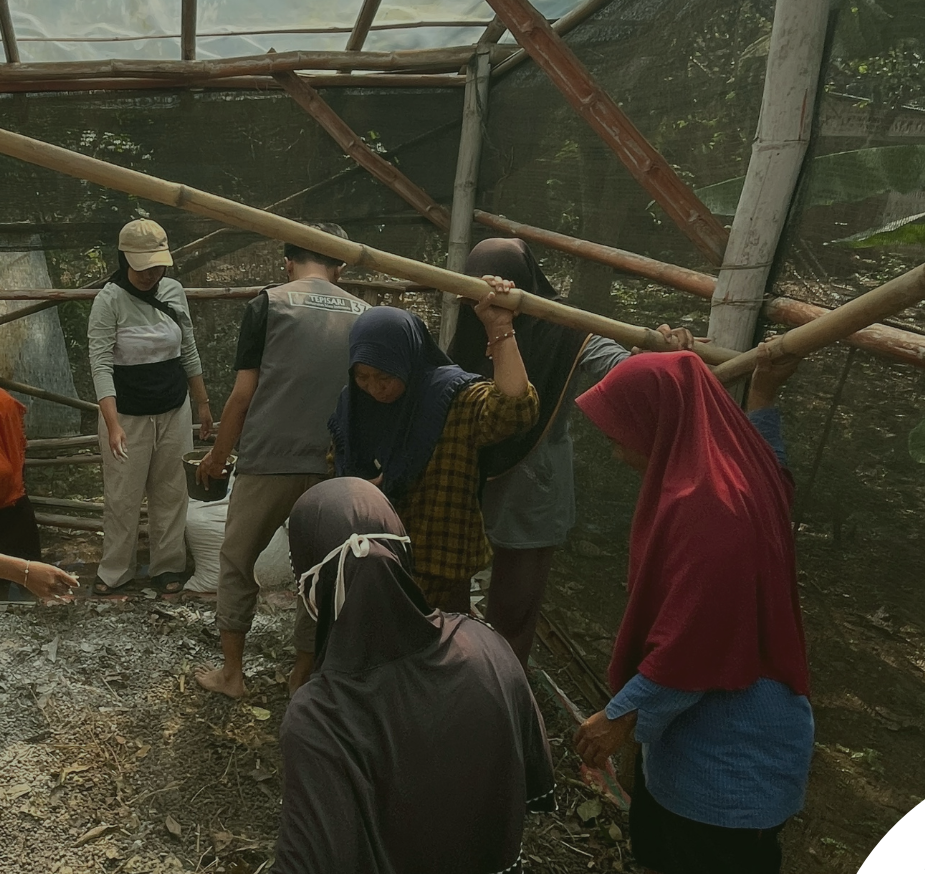
In addition, composting pits (locally known as teba) are introduced as a simple solution that enables communities to manage organic waste directly within their environment. The construction of these composting systems utilizes easily accessible materials and is adapted to local land conditions.
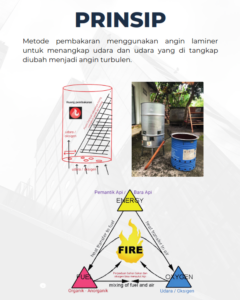
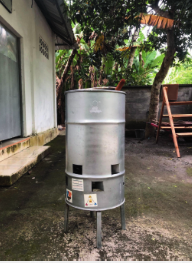
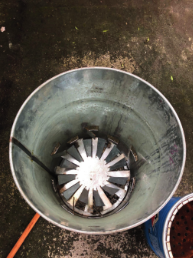
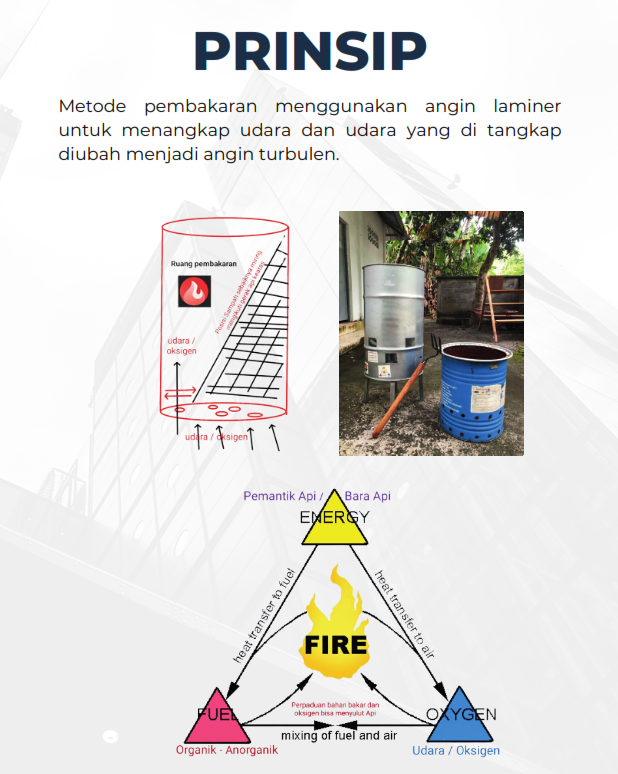
For residual waste management, a simple oxidation-based waste burning device is applied. This tool is designed to facilitate a more controlled combustion process compared to open burning practices, thereby reducing negative environmental impacts.
These activities are not limited to the implementation phase but are also intended to be continuously utilized by the community after the completion of the KKN program through the direct use of the facilities and practices that have been introduced.
The implementation of this program has shown observable changes in community waste management practices. Some of the introduced methods have begun to be adopted, and communities now have alternative approaches to handling waste beyond conventional burning. However, the sustainability of the program remains dependent on active community participation and support from local government.
Overall, Waste Management Based on KKN Universitas Islam Indonesia represents a series of field-based waste management practices that are structured in a simple and practical manner. This approach is expected to serve as a foundation for developing more realistic and sustainable community service programs within Universitas Islam Indonesia.